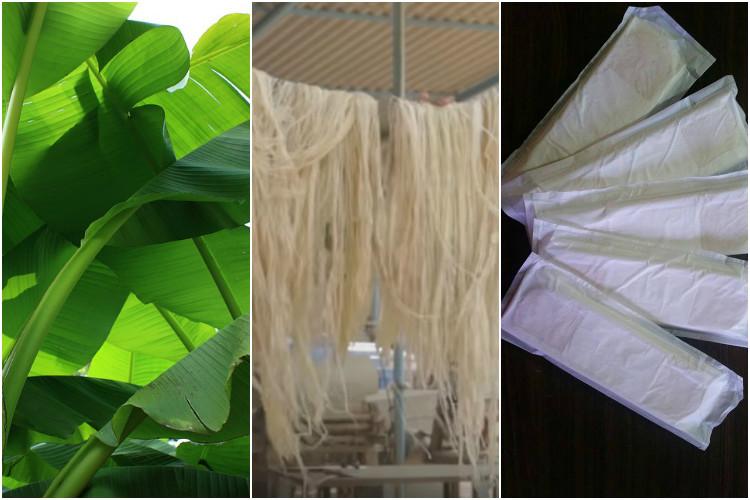
Sustainable Menstrual Health Solutions - Transforming Agricultural Waste into Opportunity
Across many communities in Africa, access to affordable menstrual hygiene products remains a significant challenge for girls and women. Limited access to sanitary products can contribute to missed school days, reduced participation in economic activities, health risks, and barriers to achieving gender equity.
At the same time, millions of tons of agricultural waste—including banana stems—are discarded each year despite their potential value.
Amsha Africa Foundation (AAF) is exploring innovative, community-driven approaches that address both challenges through sustainable menstrual health solutions.
By working with local organizations, researchers, innovators, women’s groups, and community partners, AAF has helped support initiatives that investigate the use of banana fibers as a sustainable, locally sourced material for sanitary pad production.
Why Banana Fibers?
Banana plants are widely cultivated throughout East Africa, making banana stems an abundant and renewable resource.
After harvesting fruit, the stems are often discarded despite containing natural fibers that can be processed into absorbent materials suitable for a variety of applications.
The use of banana fibers offers several potential benefits:
- Increased access to affordable menstrual hygiene products
- Reduced environmental waste
- Support for local manufacturing and entrepreneurship
- New income-generating opportunities for women and youth
- Reduced reliance on imported sanitary products
- Promotion of sustainable and environmentally responsible practices
This innovative approach has the potential to create both social and economic impact while supporting environmental sustainability.
Our Role
AAF serves as a catalyst for collaboration and innovation by connecting community organizations, educational institutions, development partners, researchers, and local leaders.
Our efforts have focused on:
- Facilitating partnerships and knowledge sharing
- Supporting research and pilot initiatives
- Connecting local innovators with potential partners
- Exploring scalable and sustainable production models
- Promoting menstrual health awareness and education
- Identifying opportunities for community-based economic development
Through these collaborations, AAF helps create pathways for locally driven solutions that address real community needs.
Beyond Menstrual Health
This initiative represents more than the production of sanitary pads.
It demonstrates how innovation, local resources, and community partnerships can be combined to solve multiple challenges simultaneously.
A single solution can:
- Improve menstrual health outcomes
- Increase school attendance for girls
- Create jobs and entrepreneurship opportunities
- Support women’s economic empowerment
- Reduce agricultural waste
- Promote environmental sustainability
By transforming what was once considered waste into a valuable resource, communities can create sustainable solutions that improve lives while protecting the environment.
Looking Ahead
AAF continues to explore partnerships and opportunities that advance menstrual health, women’s empowerment, environmental sustainability, and community-led innovation.
We believe that locally developed solutions have the power to create lasting impact and that empowering communities with knowledge, skills, and opportunity is one of the most effective ways to drive sustainable development.
Together, we can help ensure that every girl and woman has access to the products, dignity, and opportunities they deserve.